Whale Watching in Byron Bay: Your Complete Season Guide
Every winter, one of the world’s great wildlife spectacles passes right by Byron Bay’s doorstep. From June through November, around 40,000 humpback whales travel the “Humpback Highway” along Australia’s east coast — and Cape Byron, the most easterly point of the mainland, puts you closer to the action than almost anywhere else in the country.
Here is your complete guide to whale watching in Byron Bay: when to come, where to look and how to get the best view.
When to See Whales in Byron Bay
June to August: the northern migration. Humpbacks travel from Antarctic feeding grounds to warm Queensland waters to breed and calve. Expect steady traffic of adults cruising north, often close to shore.
September to November: the southern return. This is many locals’ favourite stretch — mothers travel slowly with their new calves, often resting in the bay, which means longer sightings and playful surface behaviour.
Peak viewing is generally late June to early August and again from late September through October.
The Best Land-Based Vantage Points
Cape Byron Lighthouse
The headland around the lighthouse offers sweeping elevated views of the migration route. The whales often pass within a few hundred metres of the cape. Go early morning when the sea is glassy and the light is behind you — spotting the blow (the puff of spray as a whale breathes) is far easier.
The Cape Byron Walking Track
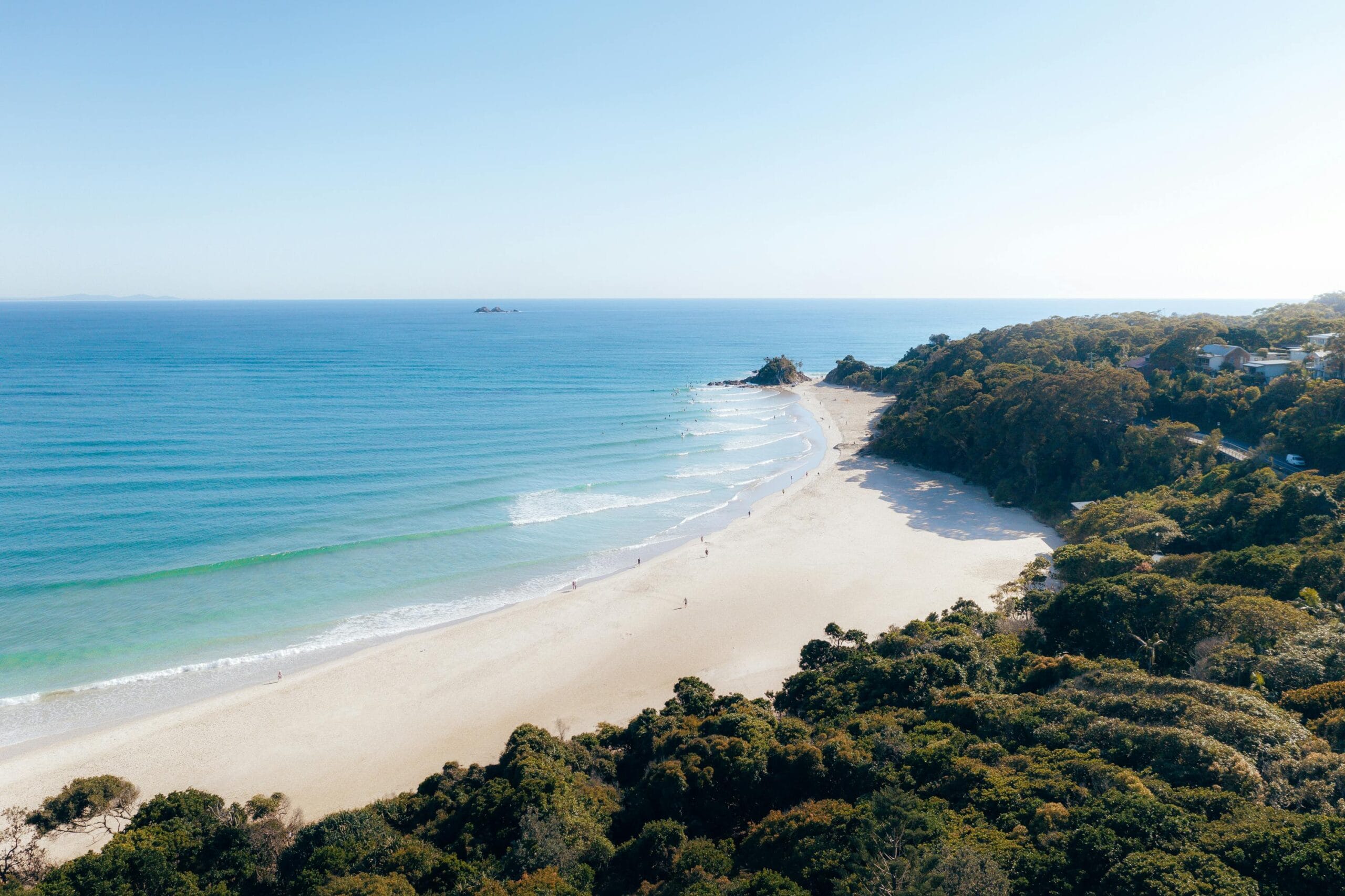
The lookouts between Wategos Beach and the lighthouse are superb, and slightly less busy than the lighthouse platform itself.
Tallow Beach and Broken Head
South-facing and quieter, these spots are great during the southern migration when mothers and calves hug the coastline.
Whale Watching Tours
Nothing compares to meeting a humpback at sea level. Cruises depart Byron Bay through the season, with sightings so reliable that most operators offer a return trip if whales do not appear. Sea kayaking tours offer an even closer-to-the-water experience — paddlers are regularly joined by dolphins as a bonus. Browse and book through our experiences page.
What to Bring
Binoculars make a real difference from land. Mornings on the cape are breezy in winter, so pack a windproof layer, and allow at least an hour — whale watching rewards patience. If you are heading out on the water, take motion sickness tablets beforehand if you are prone, and a zoom lens if you are a photographer.
Make a Weekend of It
Whale season is also Byron’s quiet season, which makes it the perfect excuse for a winter coastal escape. Reflections Byron Bay sits directly opposite Clarkes Beach, an easy walk from the Cape Byron track. For something more indulgent after a salty morning on the headland, the rainforest spa retreat at Crystalbrook Byron is twenty minutes’ walk from Tallow Beach.
Find more places to stay on our accommodation page, or search availability for your dates here.